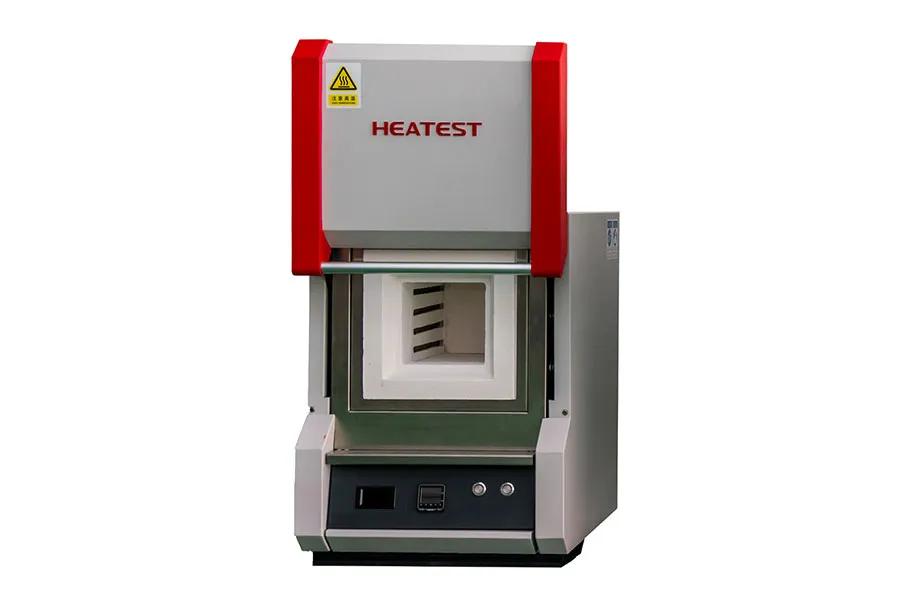
Selecting the right muffle furnace is a critical decision for laboratories, research facilities, and industrial heat treatment operations. The choice between a programmable muffle furnace and a manual muffle furnace directly impacts process accuracy, operational efficiency, and long-term cost. While both serve the fundamental purpose of high-temperature ashing, calcination, and sintering, their capabilities diverge significantly in precision, repeatability, and user control. This article provides a professional, evidence-based comparison to help you determine which type better suits your application requirements. As a trusted name in thermal processing equipment, Heatest Instrument offers both programmable and manual models, enabling an unbiased evaluation from a manufacturer with real-world engineering experience.
1. Core Differences: Programmability and Control Architecture
A manual muffle furnace relies on a basic analog or digital controller that requires the operator to set a single target temperature and manually adjust when changes are needed. Temperature ramping, soaking, and cooling are all performed through real-time human intervention. In contrast, a programmable muffle furnace is equipped with a microprocessor-based controller that can store multiple heating profiles. Users can define precise ramping rates, hold times at specific temperatures, and multistep sequences that execute automatically without supervision.
Key Operational Distinctions
-
Temperature ramping: Manual furnaces rely on the operator to gradually increase setpoint; programmable models execute linear or stepped ramps automatically.
-
Repeatability: Manual operation introduces human variability; programmable control ensures identical thermal profiles cycle after cycle.
-
Data logging: Modern programmable units often include real-time data recording and USB/RS232 output; manual models typically lack this capability.
-
Energy management: Programmable controllers can optimize heating elements to reduce power consumption during idle segments.
2. Advantages Comparison: Programmable vs Manual Muffle Furnace
To clarify the decision-making process, the following table highlights the primary advantages of each type based on common laboratory and industrial criteria. Heatest Instrument’s engineering teams have validated these factors through thousands of installations.
-
Accuracy & Precision: Programmable furnaces maintain temperature within ±1°C in steady state and ±2°C during ramping. Manual units typically achieve ±5°C stability, depending on operator skill.
-
Process Repeatability: With programmable controllers, once a profile is saved, it can be recalled and executed identically across different batches. Manual operation requires careful documentation and constant monitoring to approximate consistency.
-
Labor Requirements: Programmable furnaces drastically reduce operator attendance. A 24-hour multistep process runs unattended. Manual furnaces demand a skilled technician to adjust settings at each stage, increasing labor costs and risk of error.
-
Complex Process Capability: Programmable units handle multistage sintering, annealing, and ashing with precise soak times. Manual furnaces are best suited for single-temperature applications such as ashing at 550°C or simple drying.
-
Energy Efficiency: Programmable controllers can optimize power delivery. For example, Heatest Instrument’s programmable models use PID auto-tuning to minimize overshoot, reducing energy waste by 15-20% compared to manual operation with manual overshoot correction.
-
Initial Investment: Manual muffle furnaces have a lower upfront cost (typically 30-50% less than programmable equivalents). However, total cost of ownership including labor, rejects, and quality control often favors programmable units in production environments.
-
Maintenance Complexity: Manual units have simpler electronics, making them easier to repair in remote locations. Programmable controllers may require specialized service, though Heatest Instrument provides global support for both lines.
Click here for more details comparing programmable muffle furnaces and manual muffle furnaces—and to find out which is better: https://www.lyheatest.com/electric-furnace-knowledge/furnace-comparison-guide/