
Tower welding rotators play a critical role in fabricating wind turbine towers, where precision and stability directly affect weld quality and worker safety. Among all components, the locking mechanism stands as the first line of defense against unintended rotation, load slippage, or catastrophic failure. Understanding how these locking systems function — and what distinguishes a reliable design from a risky one — is essential for any operation that values both productivity and personnel protection. This article examines the engineering principles behind locking mechanisms in tower welding rotators, highlights key design variations, and explains why BOTA prioritizes safety in every rotator it produces.
A tower welding rotator supports and rotates heavy cylindrical sections — sometimes weighing dozens of tons — during circumferential welding. The locking mechanism serves two distinct purposes: positional locking holds the workpiece stationary at a precise angle for manual or automated welding, while emergency braking stops rotation instantly if power fails or a hazard occurs. Without a robust locking system, a sudden shift in load could crush workers, damage the weld joint, or cause the entire assembly to topple. Industry standards such as ASME B30.7 and OSHA regulations require rotators to have redundant braking and locking features. BOTA integrates both active and passive locking elements to meet these strict requirements.
Three primary locking technologies dominate the market: friction-based, mechanical pawl, and electro-mechanical brakes. Each has distinct advantages and limitations.
BOTA’s tower welding rotators exclusively use spring-applied, power-released electro-mechanical brakes on the main drive shaft, supplemented by a secondary mechanical locking pin for maintenance and setup positions. This dual-layer approach ensures that even the primary brake’s electrical system fails, the mechanical pin prevents dangerous drift.
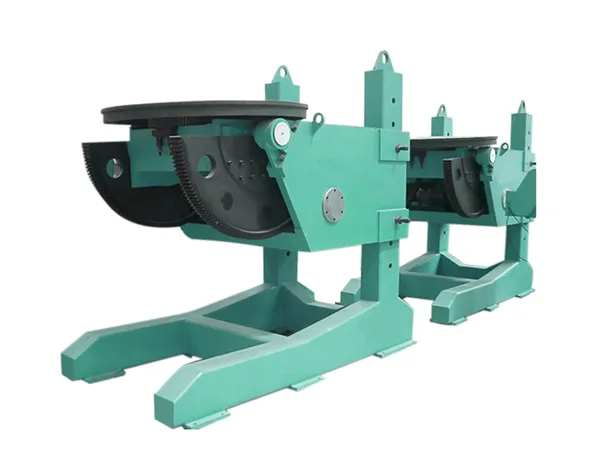
When evaluating rotator suppliers, the differences in locking design directly impact safety margins, maintenance intervals, and total cost of ownership. The table below compares BOTA’s standard locking system with conventional friction-only designs.
...
For more information about the locking mechanism of the safety-first tower welding rotator, please click to visit:https://www.bota-weld.com/en/a/news/locking-mechanisms-s.html