
When a business furnishes an office, the decision usually comes down to two materials: steel and wood. Both can look professional on day one, but they behave very differently over the following decade. Wood furniture reacts to humidity, absorbs spills, and gradually loosens at its joints. Steel office furniture holds its geometry, carries heavier loads, and can be cleaned, moved, and reconfigured without structural damage. That difference is not cosmetic. It directly affects replacement cycles, maintenance costs, and how often a working environment has to be disrupted. This article explains the material reasons steel outlasts wood, compares the two across the factors that matter most, and shows how to evaluate steel furniture so that its longevity advantage is actually delivered.
Durability is not a marketing label. It is the measurable result of how a material responds to load, moisture, temperature change, and repeated handling. Wood and steel sit at opposite ends of that spectrum, and the difference becomes obvious within the first two or three years of daily use.
Solid wood and engineered wood panels are hygroscopic, meaning they absorb and release moisture from the air. In an air-conditioned office that cycles between cool, dry conditions and humid evenings, this causes continuous expansion and contraction. Over time, the consequences accumulate:
None of these failures require abuse. Normal humidity and normal use are enough.
Cold-rolled steel, formed into welded or bolted frames and finished with a powder coating, does not absorb water, does not feed pests, and does not change dimension when the air changes. A steel pedestal, filing cabinet, or workbench keeps its square geometry because the material itself resists deformation and the joints are mechanical rather than glued. The structural integrity of a steel frame is determined at the factory, not by the climate of the building it sits in.
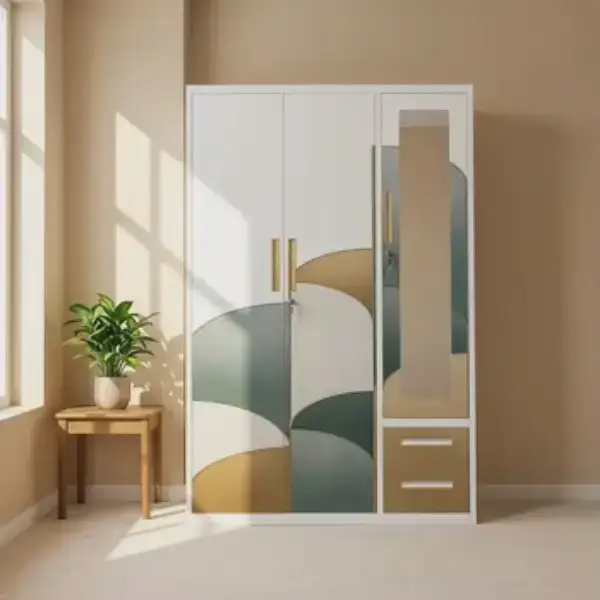
The table below is not a claim that wood has no place in an office. It is an honest comparison of the characteristics that determine how long a piece of furniture stays functional.
Purchase price is the smallest part of furniture cost. The real figure includes delivery, assembly, maintenance, replacement, and the productivity lost while an office is being refitted. When a wooden cabinet fails after a few years, the business pays for the item twice and absorbs a disruption it did not plan for.
...
For more details on why steel office furniture is more durable than wooden office furniture, please click here: https://www.lakshyofurniture.com/news-center/steel-vs-wood/