
Small teams buy steel office furniture for reasons that rarely appear in glossy catalogues: they need desks, lockers and filing that survive a move, a reconfiguration and a decade of daily use without a maintenance budget. With four to twenty people, every purchase decision is visible and every mistake is expensive per seat. This guide covers the choices that actually change the outcome — steel gauge, coating quality, storage ratios, footprint planning and supplier selection — so you can specify a set-up once and stop thinking about it.
Steel furniture earns its place in small offices for structural reasons rather than aesthetic ones. A steel pedestal, locker or workbench holds its shape under load, resists impact from daily traffic, and can be relocated without the joint failure that plagues particleboard assemblies after the second move.
The trade-off is weight and, at the low end, resonance — thin-gauge steel panels drum and rattle. Most of this buying guide is about avoiding that low end.
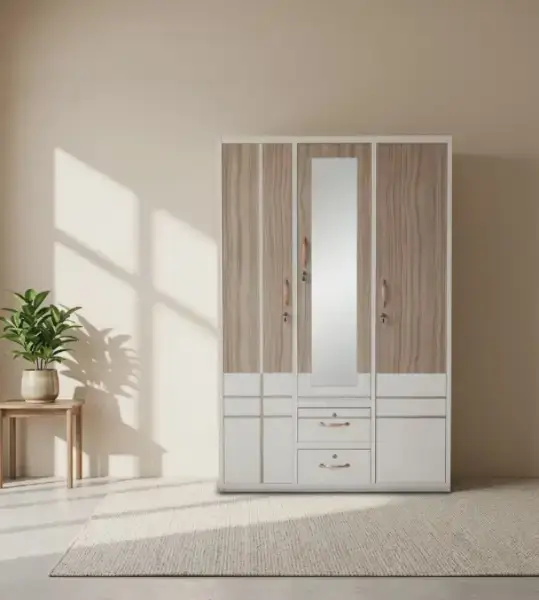
Small teams usually under-buy storage and over-buy desks. The sequence that works is to count what has to be stored, then size the furniture to it, then fit desks into whatever floor space remains.
Every full-time employee needs a lockable volume for a bag, a laptop, documents and personal items. A pedestal under the desk handles day-to-day use; a locker handles the coat, the gym bag and the backup items. For hybrid teams where desks are shared, lockers become the primary personal storage and should be sized one per person, not one per desk.
...
For more details on steel office furniture suitable for small teams, please click here: https://www.lakshyofurniture.com/news-center/steel-office-guide/