
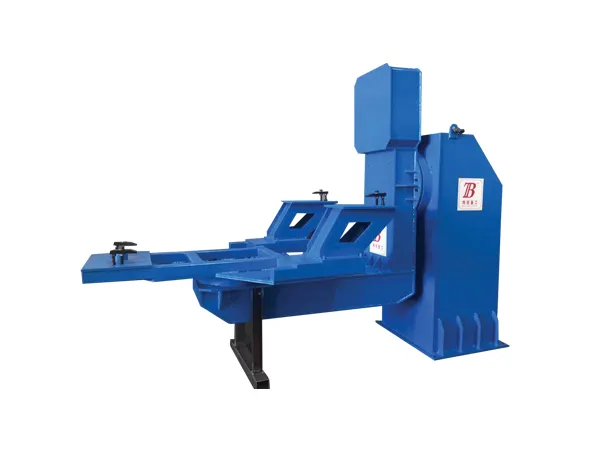
Weld distortion remains one of the most persistent challenges in wind tower manufacturing. As towers grow taller and wall thicknesses increase, the cumulative thermal stresses from multiple weld passes can lead to significant dimensional deviations, costly rework, and even structural rejection. Traditional methods—pre-set angular compensation or post-weld flame straightening—are either imprecise or time-intensive. This article examines how adaptive rotation technology, specifically the system developed by BOTA, offers a deterministic solution by dynamically adjusting the workpiece position during welding, effectively canceling distortion in real time.
Wind tower sections are typically fabricated from thick steel plates (20–80 mm) joined by submerged arc welding or gas metal arc welding. The localized heating and subsequent cooling contraction create angular distortion, longitudinal bending, and transverse shrinkage. Key contributors include:
Even a few millimeters of out-of-roundness can compromise flange fit-up during tower assembly, increase fatigue loading at weld toes, and necessitate expensive machining or straightening. Industry reports indicate that distortion-related rework accounts for up to 15% of total fabrication costs in large-diameter towers.
...
Click here for more details on Solving Weld Distortion: Adaptive Rotation for Wind Towers:https://www.lyhtsteel.com/a/blog/solving-weld-distortion-adaptive-rotation-for-wind-towers.html