
In industries such as mining, aggregate processing, metallurgy, and bulk material handling, production efficiency is often determined by the stability of screening systems rather than their nominal capacity. Among various screening technologies, the dual motor linear vibrating screen has earned widespread adoption due to its robust structure, high throughput, and relatively low lifecycle cost.
However, in practical plant operations, experienced engineers increasingly recognize a critical fact: the real performance gap between vibrating screens is not defined by steel thickness or brand name, but by the synchronization accuracy of the dual vibration motors.
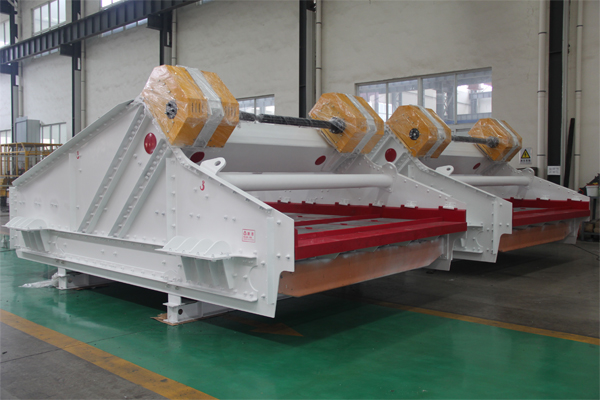
This guide goes beyond basic theory to provide a comprehensive, experience-driven explanation of synchronization mechanisms, installation best practices, precise adjustment methods, and field-proven troubleshooting strategies. Whether you are commissioning new equipment or optimizing an existing production line, understanding these details can directly translate into higher screening efficiency, reduced downtime, and longer equipment service life.
A dual motor linear vibrating screen operates using two vibration motors installed symmetrically on the screen body. Each motor generates centrifugal force through rotating eccentric blocks. When properly configured, the two motors rotate in opposite directions at identical speeds, causing lateral forces to cancel out while longitudinal forces combine to form a stable linear motion.
In theory, this sounds straightforward. In reality, even minor deviations can significantly impact performance.
When synchronization is compromised, operators typically encounter:
Irregular material flow and poor stratification
Uneven amplitude distribution across the screen surface
Noticeable increase in mechanical noise and vibration instability
Accelerated wear of bearings and structural components
Reduced screening accuracy and inconsistent product size
For industries that rely on precise particle classification—such as sand production, mineral processing, or coal preparation—these issues can quickly escalate into production losses and quality complaints. Synchronization is not just a technical parameter; it is the foundation of stable operation.
One of the most overlooked aspects of dual motor systems is that most designs do not rely on mechanical coupling devices. Instead, synchronization is achieved through a physical phenomenon known as self-synchronization.
When two independent motors are mounted on a shared rigid structure, they interact through vibration feedback. Under ideal conditions, the system naturally stabilizes into a synchronized state, with both motors maintaining a consistent phase difference and rotating in opposite directions.
This phenomenon is highly efficient but also highly sensitive.
For reliable self-synchronization, several conditions must be strictly met:
Both motors must have identical specifications (power, speed, excitation force)
Eccentric block settings must be perfectly matched
Installation must be symmetrical along the machine centerline
The screen structure must provide sufficient rigidity for vibration transmission
If any of these conditions are compromised—even slightly—the system may fail to maintain stable synchronization, leading to erratic motion patterns.
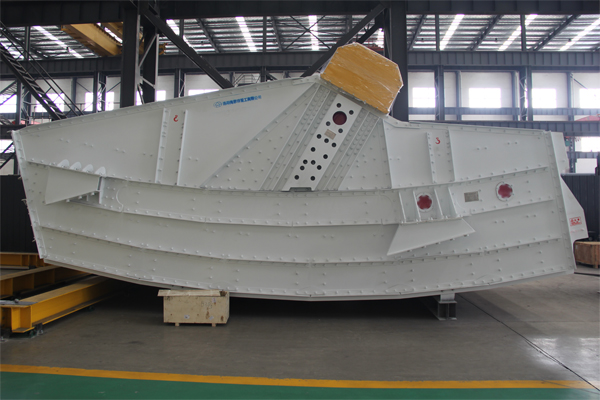
In real-world applications, synchronization problems are often traced back to installation errors rather than motor defects. Proper installation is therefore not optional—it is critical.
...
For more detailed information on the synchronization guide for dual-motor linear vibrating screens, please click to visit: https://www.hsd-industry.com/news/dual-motor-linear-vibrating-screen-synchronization/