
When companies evaluate bulk material handling equipment, they often compare electromagnetic vibrating feeders with electromechanical vibrating feeders. Both technologies play a critical role in industries such as mining, metallurgy, chemical processing, cement production, and recycling. However, the question remains: which type of vibrating feeder is better for your application?
This article provides a practical, experience-driven comparison that helps engineers, procurement managers, and plant operators make informed decisions based on real operational needs rather than generic specifications.
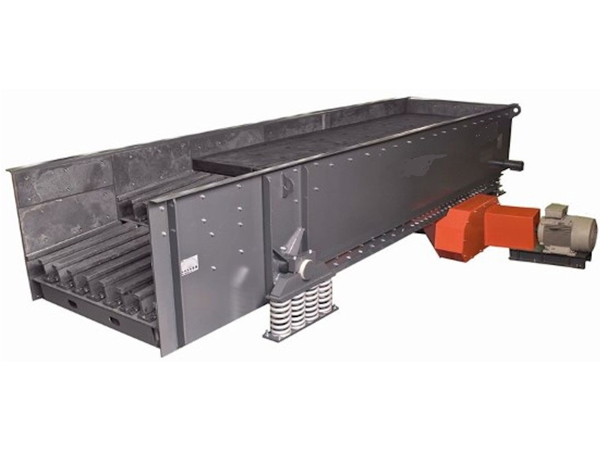
An electromagnetic vibrating feeder uses electromagnetic force to generate vibration. The system typically includes an electromagnet, armature, and control unit. The feeder vibrates at high frequency with small amplitude, allowing precise control of material flow.
Operators can adjust the feed rate instantly by modifying the electrical input, which makes this system highly responsive and suitable for automated production environments.
An electromechanical vibrating feeder relies on vibration motors (or unbalanced motors) to generate mechanical oscillation. These motors create centrifugal force that drives the feeder tray.
This design produces larger amplitudes and stronger conveying force, which makes it ideal for handling heavy loads and coarse materials in harsh industrial environments.
1. Feeding Accuracy and Control
Electromagnetic feeders excel in precision. They allow operators to fine-tune the feed rate almost instantly, which makes them highly suitable for processes that require consistent and controlled material dosing.
Electromechanical feeders, on the other hand, provide stable but less precise control. Their adjustment typically involves changing motor speed, angle, or weight configuration, which is less responsive.
Conclusion:
If your process requires high accuracy (e.g., batching, packaging, or dosing), electromagnetic feeders offer a clear advantage.
2. Material Handling Capacity
Electromechanical vibrating feeders outperform electromagnetic models when it comes to heavy-duty applications. They can handle large particle sizes, high throughput, and abrasive materials without compromising performance.
Electromagnetic feeders are better suited for light to medium loads and fine materials.
Conclusion:
For mining, quarrying, or bulk material transport, electromechanical feeders are the more robust choice.
3. Energy Efficiency
Electromagnetic feeders consume less power because they operate with controlled electromagnetic pulses. They also stop instantly when power is cut, reducing unnecessary energy usage.
Electromechanical feeders require continuous motor operation, which results in higher energy consumption over time.
Conclusion:
If energy efficiency and operating cost reduction are priorities, electromagnetic feeders are generally more economical.
4. Maintenance Requirements
Electromagnetic feeders have fewer moving parts, which reduces mechanical wear. However, they rely heavily on electrical components, which require stable voltage and proper control systems.
...
For detailed information on the differences between electromagnetic vibrating feeders and electromechanical vibrating feeders, please click to visit: https://www.hsd-industry.com/news/difference-between-electromagnetic-and-electric-vibrating-feeders/