
Electrostatic coalescers are critical in oil and gas processing for separating water-in-oil emulsions, but their performance degrades significantly when handling high-viscosity fluids. Viscosity impacts droplet migration, coalescence kinetics, and electric field distribution, requiring specialized design considerations. For operators and engineers evaluating separation technologies, understanding these design factors is essential to avoid costly retrofit and downtime. Zhengyuan Petrochemical has developed advanced electrostatic coalescer solutions tailored to high-viscosity streams, addressing challenges such as non-uniform field strength, excessive energy consumption, and slow droplet settling. This article outlines the key design parameters that determine coalescer effectiveness under high-viscosity conditions, offering a technical framework for selection and optimization.
High-viscosity fluids—typically crude oils with API gravity below 20 or with high asphaltene content—impose unique constraints on electrostatic coalescence. The primary difficulties include:
These factors necessitate a departure from standard coalescer designs. Zhengyuan Petrochemical’s engineering team incorporates computational fluid dynamics (CFD) and electric field simulation to predict performance under site-specific viscosity profiles.
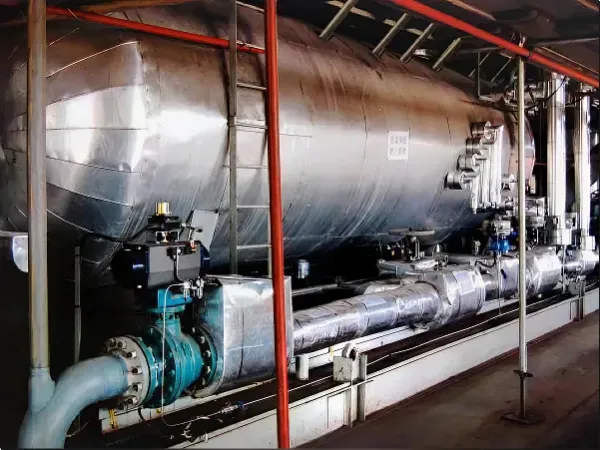
Optimizing an electrostatic coalescer for high-viscosity service involves several interdependent design parameters:
Standard parallel-plate or concentric-rod electrodes can cause field non-uniformity when fluid viscosity exceeds 500 cP. For high-viscosity applications, Zhengyuan Petrochemical recommends:
...
For more detailed information on electrostatic coalescer design: key factors for high-viscosity fluids, please click to visit: https://www.zy-petrochemical.com/a/news/coalescer-design-viscosity.html