
When designing compact machinery, every millimeter counts. The choice between thin-section bearings and standard bearings often determines whether a system fits within strict dimensional constraints. While both serve the same fundamental purpose—reducing friction between rotating parts—their structural differences lead to vastly different space efficiencies. This article provides an objective comparison between thin-section and standard bearings, focusing on space savings, load capacity, and application suitability, with insights from BIBO Bearing‘s engineering experience.
Standard bearings follow established dimensional series (e.g., 6200, 6300 series) with proportional cross-sections relative to bore diameter. Thin-section bearings, by contrast, maintain a constant, thin cross-section across a wide range of bore sizes. This design philosophy makes them inherently space-efficient, especially in larger diameters where standard bearings would require dramatically larger housings.
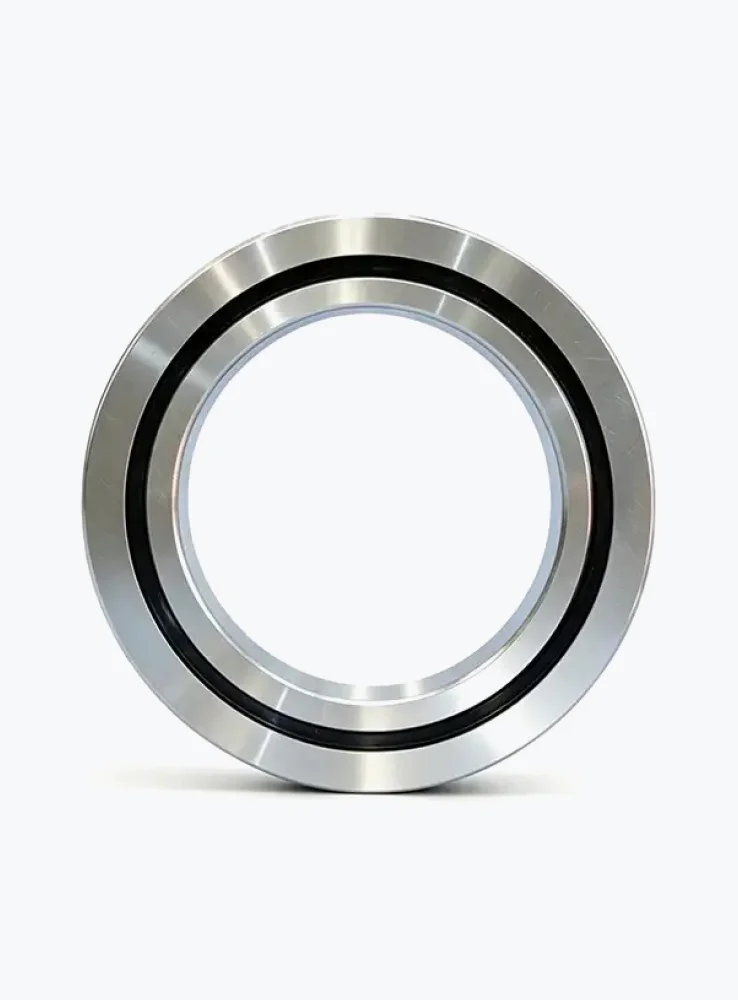
The most direct way to evaluate space efficiency is to compare a thin-section bearing with a standard bearing of the same bore diameter and load rating. Below is a representative comparison based on typical engineering data (see table for illustrative values; actual specifications vary by manufacturer).
...
For more detailed information on the differences between thin-section bearings and standard bearings, please click to visit: https://www.bobibearing.com/a/bearing-knowledge/thin-section-vs-standard.html