
Precision rotation is the silent backbone of modern industry—from robotic joints and semiconductor lithography to satellite gimbals and medical imaging systems. As machines demand ever greater accuracy, stiffness, and compactness, conventional bearing solutions are hitting their limits. Enter crossed roller bearings: a design that has quietly transformed the way engineers approach high-precision rotary motion. This article examines the engineering principles, comparative advantages, and future trajectory of crossed roller bearings, with particular attention to the innovative work being done by BIBO Bearing in advancing this critical technology.
Unlike standard ball bearings or single-row roller bearings, crossed roller bearings use cylindrical rollers arranged perpendicularly in alternating directions within a single raceway. Each roller is separated by a spacer, allowing them to cross at 90 degrees relative to one another. This seemingly simple arrangement creates a bearing that can handle radial, axial, and moment loads simultaneously—and it does so with exceptional rigidity in a very compact envelope.
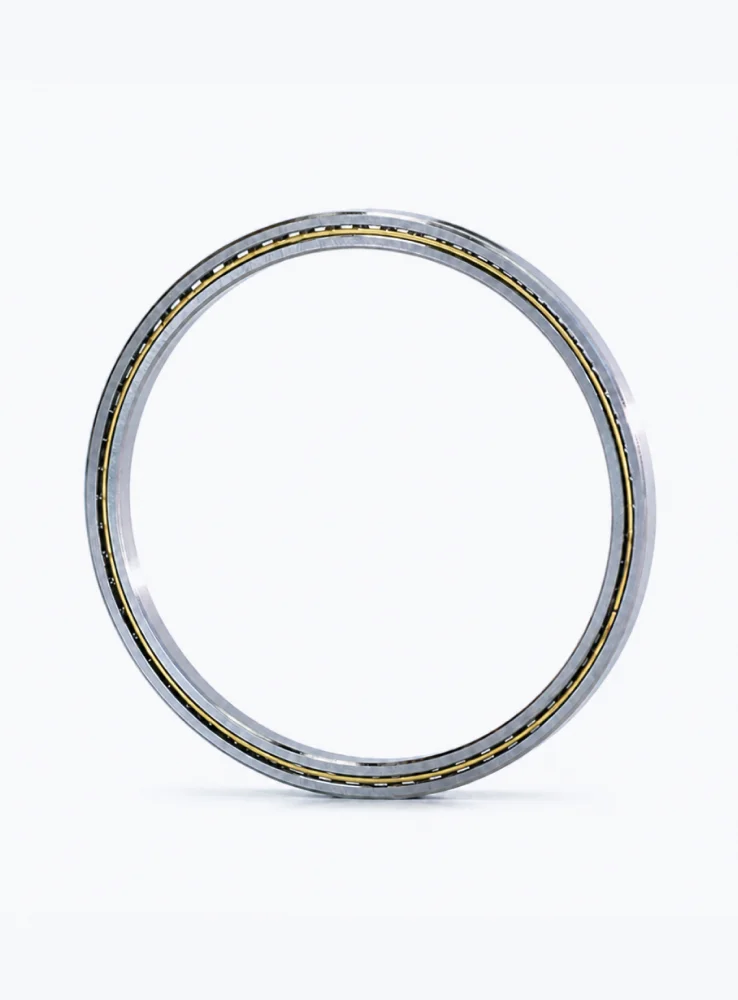
When selecting a bearing for precision rotation, engineers typically compare crossed roller bearings against angular contact ball bearings, radial ball bearings, and turntable bearings. The following list highlights the decisive advantages that crossed roller bearings offer in demanding applications:
That said, crossed roller bearings are not always the cheapest option upfront. Their precision manufacturing and specialized raceway grinding require investment. Yet when total cost of ownership is considered—including installation labor, maintenance, and system reliability—they frequently prove more economical in high-end automation.
...
For more details on the future of precision rotation and crossed roller bearings, please click here: https://www.bobibearing.com/a/bearing-knowledge/precision-crossed-roller-bearings.html