
The fundamental difference lies in material science. Steel has a significantly higher yield strength—typically 250–350 MPa for structural steel versus 200–300 MPa for high-strength aluminum alloys. In tunnel formwork, which must withstand repeated concrete pouring cycles and heavy loads, steel retains its shape with less deflection. Aluminum, while strong initially, can experience permanent deformation under repeated high stress, especially at elevated temperatures (common in curing concrete).
Steel exhibits superior fatigue resistance. In a typical 1000-cycle tunnel formwork application, steel panels show minimal wear, whereas aluminum panels often begin to crack or warp after 300–500 cycles. Gaofei’s steel tunnel formwork systems are engineered with Q235B or Q355B steel (yield strength 235–355 MPa) and heat-treated to enhance durability, providing a service life 2–3 times longer than comparable aluminum systems.
For tall tunnel sections (above 4 meters) or large spans, steel’s rigidity is essential to maintain dimensional accuracy and prevent slab sagging.
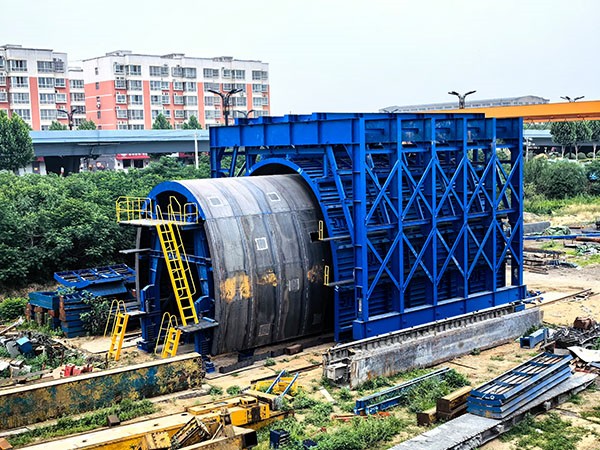
On construction sites, formwork faces constant abuse from rebar, concrete spillage, cleaning tools, and accidental impacts. Steel’s hardness (120–200 HB) is roughly 3 times that of aluminum (60–80 HB). This means steel is much less prone to gouges, dents, and surface scratches. Even with a protective coating, aluminum’s softer surface gets damaged faster, leading to rougher concrete finishes and reduced reusability.
...
For more information about the superior durability of steel tunnel formwork compared to aluminum formwork, please click to visit:https://www.gf-bridge-tunnel.com/a/blog/steel-tunnel-formwork.html