
Foundation costs often represent 15–20% of total construction expenses, making them a critical factor in project budgets. If you are exploring structural alternatives that can reduce this burden while maintaining safety and longevity, lightweight steel frames offer a proven solution. By replacing traditional heavy materials with high-strength, low-weight steel sections, builders can lower foundation loads by up to 40%, directly translating to savings of 30% or more on foundation work. This article explains the engineering behind these savings, compares lightweight steel frames with conventional methods, and highlights how MeiChen Steel delivers reliable, cost-effective frame systems for residential and commercial projects.
The principle is straightforward: a lighter building requires a less massive foundation. Traditional concrete block or timber-framed walls can weigh two to three times more than equivalent lightweight steel assemblies. By using cold-formed steel studs and joists, the total dead load on the foundation decreases significantly. This reduction allows engineers to specify shallower footings, smaller concrete volumes, and in some cases, avoid deep excavation entirely. An average 2,000-square-foot home framed with lightweight steel can save approximately 30 cubic yards of concrete compared to a similar masonry structure—a direct cost reduction of $4,000–$6,000 at current market rates. Furthermore, because the foundation experiences lower lateral and vertical stresses, reinforcement steel and labor hours are also reduced.
Lightweight steel frames distribute loads more evenly through multiple thin columns rather than a few heavy bearing walls. This reduces point loads on the foundation, enabling simpler slab-on-grade or strip footing designs. For projects on poor soil conditions, where deep piles or soil stabilization would normally be required, the reduced weight can eliminate those expensive solutions. MeiChen Steel's engineered frames are designed to optimize load paths, ensuring maximum savings without compromising structural integrity.
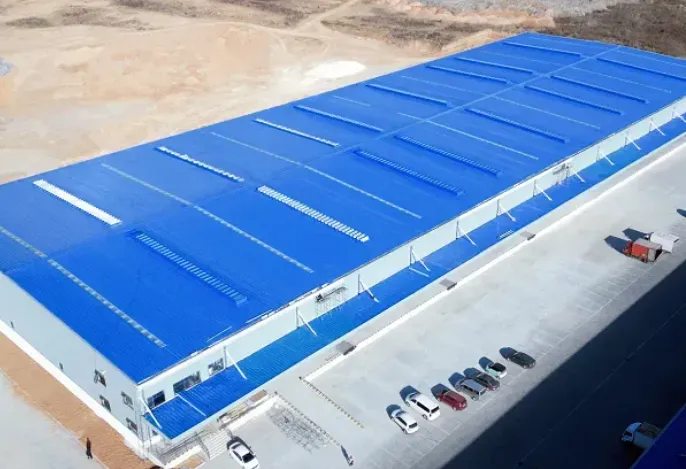
To quantify the advantages, consider a typical three-story commercial building. A concrete-framed structure with masonry infill walls would require a foundation depth of 1.2 meters and a concrete volume of 85 cubic meters. The same design using lightweight steel frames would cut the required depth to 0.8 meters and concrete volume to 55 cubic meters—a 35% reduction. The table below summarizes key cost factors:
Beyond immediate cost savings, lightweight steel frames also reduce foundation construction time. Because less concrete and fewer reinforcing bars are needed, curing and inspection phases are shorter. This accelerated timeline can reduce financing costs and bring buildings into service faster.
...
The increased use of lightweight steel structural frames can save 30% on foundation costs; click here for more details: https://www.meichensteel.com/a/procurement-guides/save-on-foundation-costs.html