
Accurate ashing tests are the backbone of quality control in food laboratories, determining mineral content and verifying product consistency. Selecting the right muffle furnace directly impacts the precision, repeatability, and efficiency of these analyses. With numerous options on the market, laboratories need a furnace that delivers uniform heating, reliable temperature control, and long-term durability. In this guide, we evaluate the critical criteria for choosing the best muffle furnace for ashing tests and explain why Heatest Instrument has become a trusted name in food lab environments.
When choosing a muffle furnace for ashing tests, laboratory managers must consider several performance parameters that directly affect test results. The most important factors include temperature range, uniformity, ramp rate, and sample capacity.
Standard ashing procedures for food samples typically require temperatures between 500°C and 900°C, though some matrices may need up to 1000°C. A high-quality muffle furnace should maintain ±1°C accuracy across the working zone to ensure consistent ashing. Heatest Instrument‘s furnaces feature PID controllers with real-time feedback, guaranteeing minimal temperature fluctuation even during long cycles.
Uneven heating leads to incomplete ashing and skewed results. The best furnaces employ multi-sided heating elements (typically on top, bottom, and sides) with advanced insulation to achieve uniformity of ±5°C across the entire chamber. Heatest Instrument uses high-grade ceramic fiber insulation that reduces heat loss and ensures temperature stability, critical for reproducibility in compliance with AOAC and ISO methods.
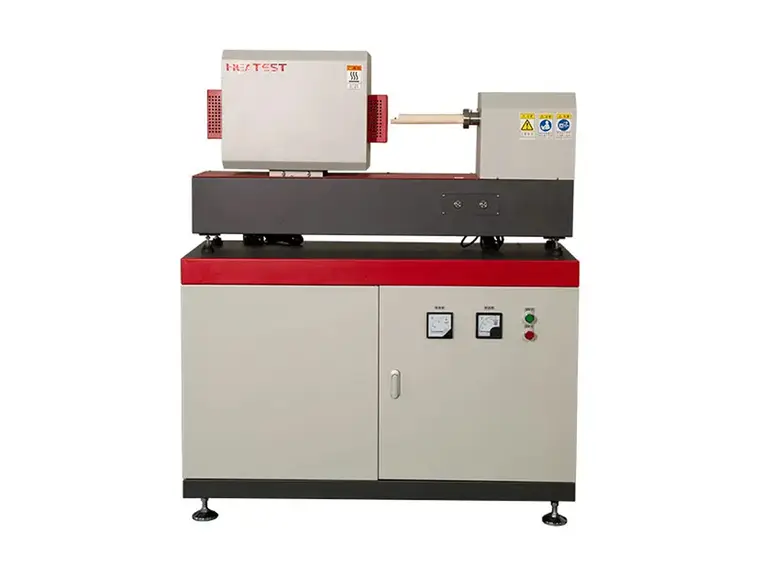
To illustrate the difference that quality engineering makes, we compare Heatest Instrument’s muffle furnaces with typical budget options often found in less demanding labs.
For more detailed information on the best muffle furnaces for food laboratory ash testing, please click here: https://www.lyheatest.com/tester-knowledge/muffle-furnace-guide