
Selecting the right muffle furnace for ceramic sintering is a critical decision that directly affects product quality, energy efficiency, and operational safety. Ceramic materials demand precise thermal profiles, high-temperature uniformity, and robust construction to achieve consistent densification without defects. Whether you are setting up a new production line or upgrading an existing lab, understanding the technical specifications and design trade-offs is essential. This article breaks down the core factors you must evaluate before making a purchase, with practical insights grounded in industrial experience. As a trusted name in thermal processing equipment, Heatest Instrument offers reliable solutions tailored to ceramic sintering requirements.
In ceramic sintering, even minor temperature deviations can cause uneven shrinkage, warping, or incomplete densification. Therefore, the furnace's ability to maintain a consistent temperature across the entire work zone is paramount. When evaluating a muffle furnace, check the manufacturer's stated uniformity rating, typically expressed as ±X°C within a specified volume at a setpoint. A quality furnace for ceramic applications should achieve ±3°C or better at peak temperatures (e.g., 1600°C).
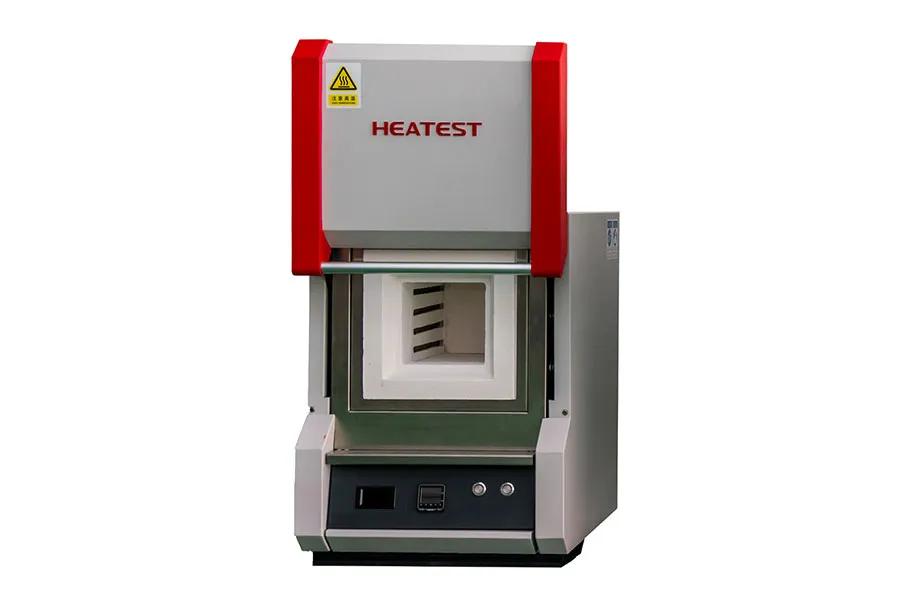
Several design aspects influence uniformity: insulation thickness, placement of heating elements, and airflow or convection management. High-end models use multiple independent heating zones controlled by separate thermocouples, allowing fine-tuning of the thermal gradient. For example, Heatest Instrument's advanced series features triple-zone PID control with dual feedback loops, ensuring that the temperature profile remains flat even during rapid heating or cooling cycles. Always request a temperature uniformity test report (usually per ASTM or AMS standards) before committing to a purchase.
Ceramic sintering often requires complex ramp-up, soak, and cool-down profiles. A basic ON/OFF controller is insufficient; instead, look for a furnace equipped with a programmable PID controller that supports at least 16–24 segments of programmable steps. The controller should allow you to define heating rates (e.g., 5°C/min for alumina, slower for silicon carbide), hold times, and cooling slopes.
Modern controllers also offer data logging via USB or Ethernet, enabling process traceability and quality assurance. For R&D environments, options like remote monitoring and recipe management are valuable. Heatest Instrument integrates Eurotherm or Honeywell controllers in its ceramic-specific furnaces, providing intuitive touchscreen interfaces and multi-language support. Verify that the controller's accuracy (typically ±0.1°C) matches your process tolerance.
The heating element is the heart of the furnace. For ceramic sintering above 1200°C, common choices include molybdenum disilicide (MoSi2), silicon carbide (SiC), and Kanthal Super. Each has distinct advantages and trade-offs:
...
Click here for more detailed information on key selection criteria for muffle furnaces used in ceramic sintering: https://www.lyheatest.com/electric-furnace-knowledge/muffle-furnace-guide-1/