
For glass fabricators, every square meter of material that ends up as scrap directly impacts profitability. Yet many operations still rely on legacy cutting patterns or manual programming, leaving significant yield on the table. The difference between a profitable order and a marginal one often lies not in the glass itself, but in the intelligence of the cutting software. This article examines how smart programming—pioneered by companies like DISAI—transforms cutting layouts, reduces waste, and turns raw sheet utilization into a measurable competitive advantage. We will explore the key principles, specific techniques, and practical considerations for maximizing yield in real-world production environments.
Traditional cutting software treats each order as a simple geometry problem: fit rectangles into a sheet. Smart programming goes far beyond that. It considers grain direction, defect avoidance, remnant management, and blending multiple orders on the same sheet. By continuously recalculating the most efficient layout for every batch, intelligent algorithms can increase yield by several percentage points—a substantial gain when material costs represent 60–80% of total production cost.
Static nesting uses preset rules and does not adapt to real-time variations such as slight size changes, glass quality issues, or urgent order insertions. Dynamic optimization, on the other hand, recalculates the entire cutting plan whenever new data arrives. DISAI's programming systems employ dynamic algorithms that evaluate multiple layout scenarios and select the one with the highest total useful area, while respecting cutting constraints like blade spacing and cutting head rotation. This makes the difference between a 'good enough' layout and the best possible layout for every sheet.
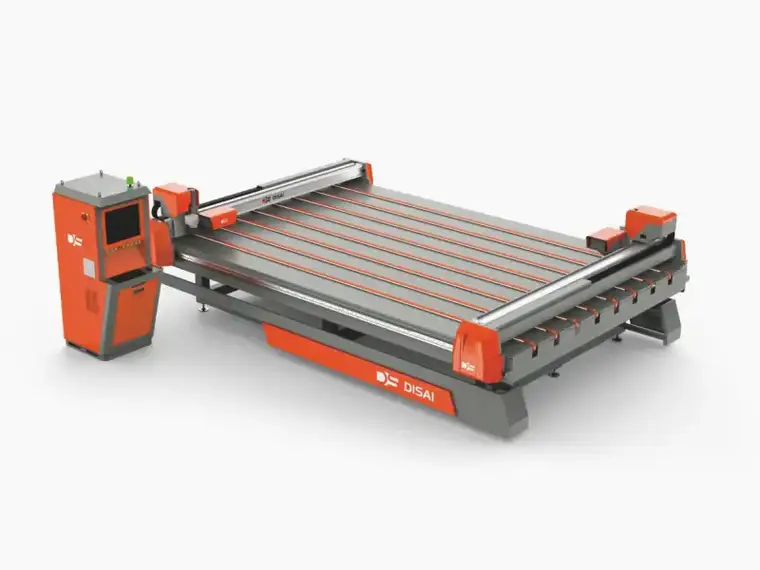
Implementing smart programming is not a single action but a combination of advanced practices. The following techniques have been shown to deliver the greatest impact on yield improvement:
DISAI's cutting solutions integrate all of the above capabilities into a single workflow. The system imports CAD definitions, automatically extracts part dimensions, and runs an optimization engine that iterates millions of layout permutations in seconds. The result is a cutting plan that minimizes waste while respecting the user's specific constraints—maximum sheet dimensions, cutting speed limits, and glass type compatibility. For facilities running just-in-time delivery, DISAI's smart programming also allows last-minute order merging without disrupting the physical cutting sequence.
...
For more details on maximizing glass production through intelligent programming, please click here: https://www.disaiglass.com/industry-news/maximize-glass-yield/