
The glass industry is undergoing a fundamental transformation. Traditional cutting methods, which rely heavily on manual measurement and operator skill, are being replaced by intelligent systems that combine precision automation with real-time data processing. For manufacturers and fabricators, understanding these smart machines is no longer optional—it is a competitive necessity. This article explains the core technologies behind smart glass cutting machines, their practical benefits, and what to look for when upgrading your production line. From advanced vision systems to AI-driven optimization, we break down how these systems work and why they represent the future of glass processing. As a leading manufacturer in this space, DISAI brings years of field-tested expertise that helps you make an informed investment.
Not every CNC machine deserves the label “smart.” A truly intelligent glass cutting system goes beyond simple programmable logic. It perceives, learns, and adapts. The core difference lies in how the machine handles variability—such as slight deviations in glass thickness, surface quality, or thermal stress—without sacrificing cutting quality.
Modern smart cutters are equipped with high-resolution cameras and laser scanners that map each glass sheet before cutting. These vision systems detect defects, measure actual dimensions, and identify the best nesting layout in real time. Instead of relying on fixed coordinates, the machine aligns itself to the true geometry of every sheet. This dramatically reduces errors caused by prior cutting or grinding steps.
Artificial intelligence plays a pivotal role in optimizing the cutting path. Smart algorithms calculate the most efficient sequence of cuts, minimizing waste and reducing cycle time. More advanced systems learn from historical production data to predict wear on cutting wheels, compensate for tool wear, and even adjust cutting speed based on the glass composition. This level of self-optimization is impossible with conventional cutters.
Precision-driven AC servo motors replace traditional pneumatic drives, providing instantaneous feedback on position and pressure. This allows the cutting head to maintain a consistent scoring depth even when glass thickness varies across a single sheet. The result is a clean, uniform cut that improves subsequent edge breaking and finishing.
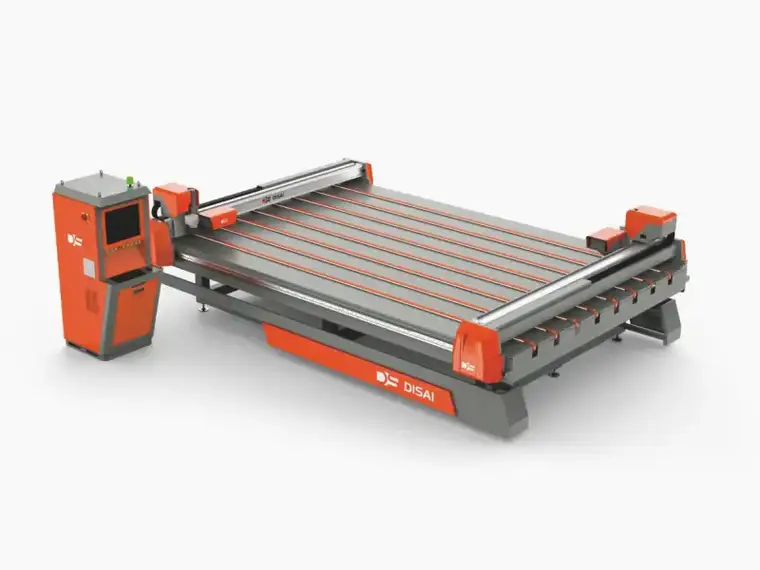
Adopting smart technology is not just about staying current—it directly impacts your bottom line. Here are the most significant benefits for glass processors:
DISAI has been active in glass machinery for decades, but the current generation of smart cutting systems reflects a deep understanding of the realities of fabrication shops. Our machines are not simply retrofitted with sensors; they are designed from the ground up as intelligent production tools.
...
For more on the future of glass cutting—including a detailed look at intelligent machinery—please click here: https://www.disaiglass.com/industry-news/glass-cutting-tech/