
In the competitive landscape of petrochemical processing, energy consumption directly impacts profitability. Zhengyuan Petrochemical, a mid-sized refinery in China, faced escalating operational costs due to inefficient oil-water separation in their desalting units. Traditional gravity-based separators required excessive heating and pumping, consuming over $1.2 million annually in energy alone. Seeking a more sustainable approach, they implemented an electrostatic coalescer—a technology that uses electric fields to accelerate droplet coalescence without thermal input. The result was a dramatic 42% reduction in energy use, saving the company $500,000 every year. This case study examines the technical drivers behind the solution, the implementation process, and the quantifiable financial impact that drove a full return on investment within 14 months.
Crude oil desalting is a critical step in refining, removing salts and water to prevent corrosion and catalyst poisoning. At Zhengyuan Petrochemical, the existing two-stage desalting system relied on heat to reduce oil viscosity and promote water separation. The process required heating the crude to 120°C using steam heaters, followed by pumping through large settling tanks. Annual energy expenditure—covering steam generation, pumping, and auxiliary equipment—exceeded $1.2 million. Additionally, the inherent inefficiency of gravity settling meant that residual water content remained around 0.5%, forcing subsequent distillation units to work harder, further raising energy costs.
The primary bottleneck was the slow coalescence rate of water droplets dispersed in the oil phase. To enhance settling, operators had to increase retention time, which demanded larger vessels and more heat. Zhengyuan’s engineering team calculated that reducing the energy footprint by even 25% would yield significant savings. However, conventional chemical demulsifiers and mechanical coalescers had already been optimized without breakthrough results. The need for a novel, non-thermal solution became evident.
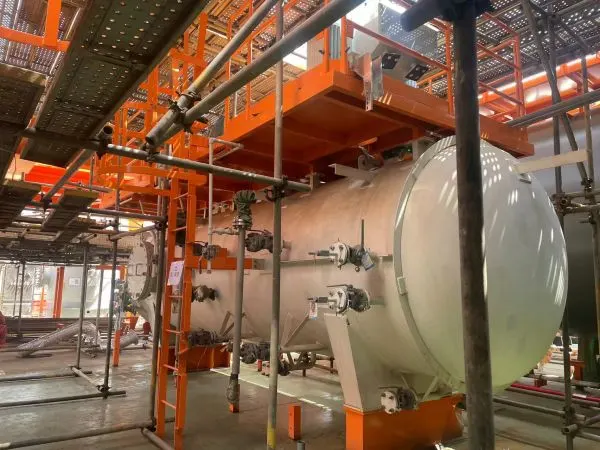
An electrostatic coalescer works by applying a high-voltage electric field across the oil-water mixture. The field polarizes water droplets, causing them to attract each other and form larger droplets that settle quickly under gravity. Unlike thermal methods, this process requires minimal energy—typically only a few kilowatts for the power supply. Zhengyuan Petrochemical selected a modular electrostatic coalescer rated for 1,200 barrels per day, which could be retrofitted into the existing desalter vessel without major piping changes.
...
For more details on the case study: Electrostatic coalescer saves $500,000 in energy annually, please click here: https://www.zy-petrochemical.com/a/news/electrostatic-coalescer.html