
In modern construction engineering, formwork systems play a decisive role in determining not only the structural quality of a project but also its overall cost efficiency, construction speed, and long-term performance. Among the most widely discussed systems today are tunnel formwork and conventional formwork. Both methods have been applied across residential, commercial, and infrastructure projects worldwide, yet their cost-effectiveness depends heavily on project scale, design repetition, labor conditions, and construction timelines.
Understanding the real economic impact of these two systems requires more than a surface comparison of equipment prices. It involves evaluating the entire construction lifecycle, including labor productivity, material utilization, project duration, safety performance, and long-term maintenance implications. This article provides a structured and practical comparison to help contractors, developers, and project owners make more informed decisions based on engineering and economic logic rather than assumptions.
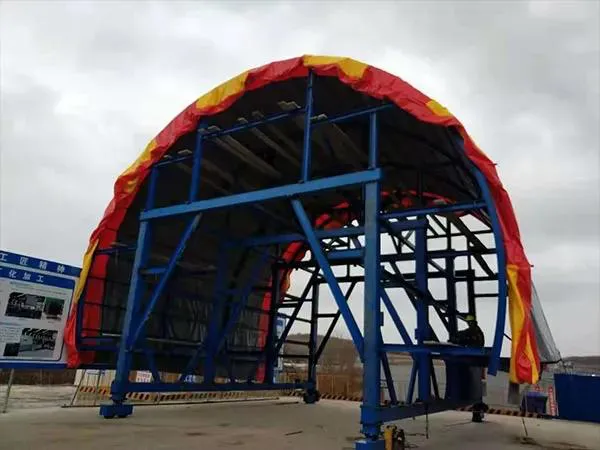
Tunnel formwork is a highly industrialized construction system that allows walls and slabs to be cast in a single operation. It is typically used in repetitive housing projects such as apartments, dormitories, and large-scale residential developments. The system relies on steel forms that are reused in a cyclic process, enabling fast floor-by-floor construction with high dimensional accuracy.
Conventional formwork, on the other hand, refers to traditional methods that use timber, plywood, aluminum panels, or a combination of modular systems. This approach is highly flexible and widely used in buildings with complex geometries, irregular layouts, or unique architectural requirements. Unlike tunnel formwork, conventional systems generally require separate casting of structural components such as beams, slabs, and columns, which increases construction steps and coordination efforts.
Both systems serve essential roles in the construction industry, but their cost structures and operational efficiencies differ significantly.
From a procurement perspective, tunnel formwork requires a relatively high upfront investment. The steel molds and supporting systems are engineered for repeated use and precision alignment, which increases manufacturing costs. Contractors adopting this system must allocate sufficient capital at the early stage of the project.
Conventional formwork systems usually have a lower initial cost. Timber and plywood systems, in particular, are inexpensive and easy to source. Even modular aluminum formwork systems, while more expensive than timber, generally require less capital investment than a full tunnel formwork setup.
However, focusing only on initial cost can be misleading. Tunnel formwork achieves cost efficiency through repetition and reuse, while conventional systems often incur continuous material consumption and higher labor dependency throughout the project lifecycle.
One of the most significant advantages of tunnel formwork lies in construction speed. Since walls and slabs are cast in a single pour, a typical floor cycle can be completed within 1 to 2 days under well-managed site conditions. This rapid cycle allows developers to significantly shorten overall project duration.
Shorter construction time directly translates into reduced overhead costs, including site management, equipment rental, financing interest, and labor supervision expenses. In large-scale housing projects, these savings can become substantial.
Conventional formwork systems, however, involve multiple sequential steps. Formwork installation, reinforcement placement, and concrete pouring are often carried out in separate stages for different structural elements. This naturally extends the construction timeline. While experienced teams can optimize workflow, the overall speed remains lower compared to tunnel formwork in repetitive building layouts.
From a cost-effectiveness perspective, time savings in tunnel formwork often compensate for its higher initial investment, especially in projects where speed-to-market is a priority.
...
For more detailed information on the differences between tunnel formwork and traditional formwork, please click to visit: https://www.gf-bridge-tunnel.com/a/blog/difference-between-tunnel-formwork-and-traditional-formwork.html