
Crossed roller bearings are a specialized class of rotary bearings in which cylindrical rollers are arranged at 90-degree intervals along the raceway, alternating in direction. This crossed configuration allows a single bearing to handle radial loads, axial loads, and tilting moments simultaneously, which is why precision motion systems in robotics, machine tools, and medical equipment rely on them. For engineers and procurement teams, understanding how these bearings work and how to select them is essential to achieving repeatable positioning accuracy and long service life.
The defining feature of a crossed roller bearing is its roller arrangement. Unlike conventional bearings that use balls or parallel rollers, the cylindrical rollers in a crossed roller bearing are positioned perpendicular to one another in a V-shaped raceway groove. This design creates a line-contact relationship between the rollers and the raceway, distributing load across a wider surface area than point-contact ball bearings can achieve.
The practical consequences are significant for precision motion:
Preload is applied by adjusting the inner or outer ring spacing, or by using matched spacer rings. Proper preload eliminates internal clearance, increases stiffness, and improves positioning repeatability. Too little preload leaves the system compliant and prone to vibration; too much preload accelerates wear and raises friction torque. BIBO Bearing supplies crossed roller bearings in both standard and custom preload configurations to match specific motion requirements.
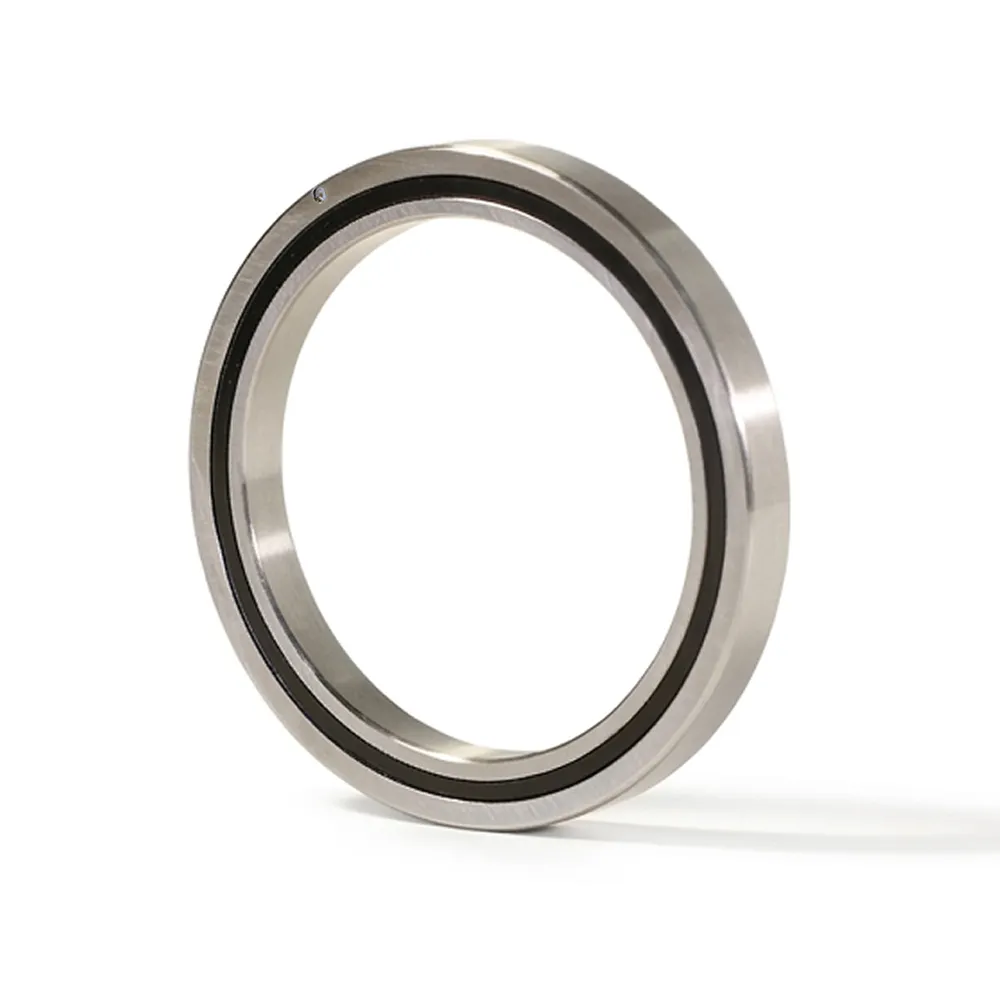
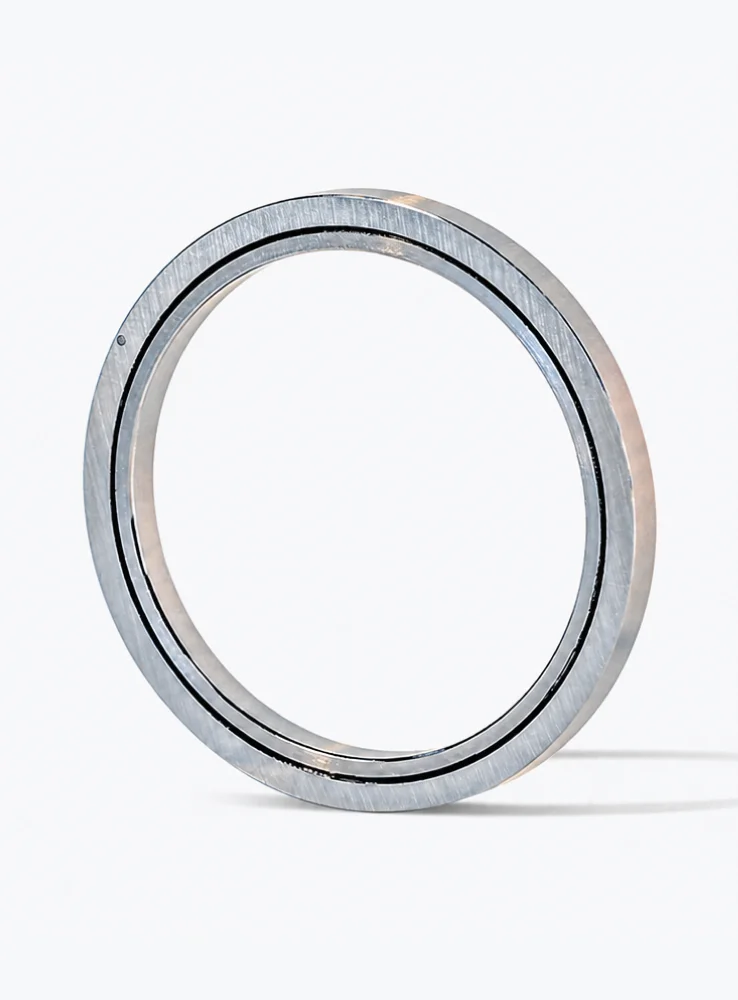
Crossed roller bearings are not a general-purpose commodity. They appear in systems where angular error directly affects output quality or process yield. Common applications include:
In each case, the bearing is a motion-critical component rather than a supporting part. Failure or excessive clearance does not merely cause noise; it degrades the function of the entire machine.
...
For more detailed information on precision motion guides using crossed roller bearings, please click here: https://www.bobibearing.com/a/bearing-knowledge/crossed-roller-bearings-precision-motion-guide.html