
The push toward miniaturization in automation has placed unprecedented demands on robot arm design. Smaller, lighter, and faster—these compact robot arms must maintain exceptional precision and stiffness while operating in increasingly tight spaces. At the heart of this engineering challenge lies a critical component: the bearing. Traditional ball bearings often fall short in meeting the combined requirements of high moment load capacity, axial rigidity, and rotational accuracy within a limited envelope. This is why crossed roller bearings have become the go-to solution for compact robot arm joints, and understanding their unique advantages is essential for any engineer seeking optimal performance.
Compact robot arms—often used in collaborative robots, medical devices, and laboratory automation—operate under fundamentally different constraints than their larger counterparts. The reduction in size does not proportionally reduce the demands on the bearing system.
These factors directly influence the bearing selection. A bearing that works well in a large industrial arm may fail prematurely in a compact design due to insufficient rigidity or excessive clearance.
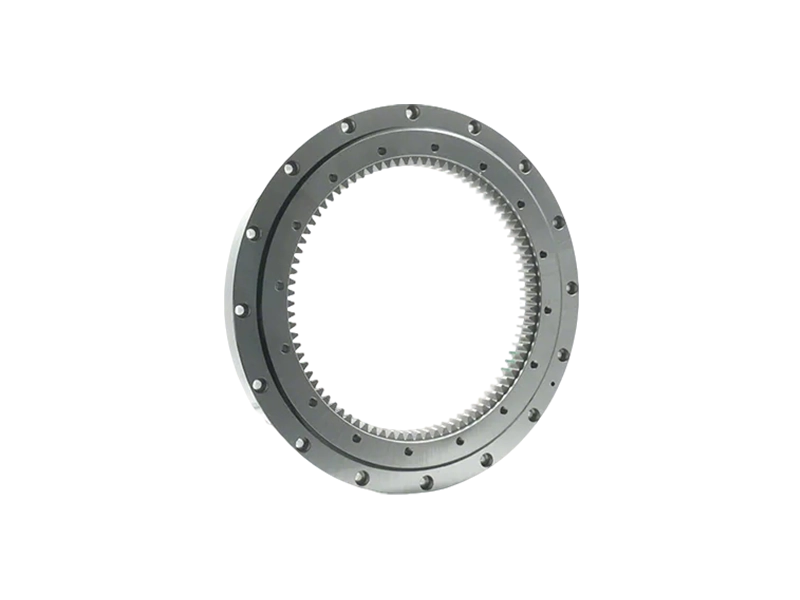
A crossed roller bearing consists of cylindrical rollers arranged in a cross pattern between inner and outer rings. Each roller alternates orientation by 90 degrees, creating a structure that can handle axial loads from both directions, radial loads, and moment loads with a single row of rolling elements. This design offers distinct mechanical advantages.
...
For more information on why small robotic arms need crossed roller bearings, please click here:https://www.prsbearings.com/a/news/compact-robot-bearing.html