
Dust is not a nuisance for roller bearings — it is a wear mechanism. In mining, cement, aggregate, agricultural and steel plants, airborne particles smaller than a grain of sand enter bearing housings, mix with grease, and turn a smooth raceway into an abrasive grinding surface. The seal is the only barrier between that environment and the rolling elements, which is why seal choice often matters more than bearing brand in dusty applications. This guide compares the seal types commonly fitted to roller bearings, explains where each one works and where it fails, and sets out the selection criteria that keep equipment running between planned shutdowns.
A roller bearing running in a clean, well-lubricated housing can reach its calculated L10 life without difficulty. The same bearing in a quarry conveyor or a cement kiln fan rarely gets there. In practice, most premature roller bearing failures in dusty plants trace back to contamination rather than fatigue.
The damage sequence is predictable:
Particle size determines how much damage a given ingress rate causes. Particles in the 5 to 20 micron range are the most destructive for roller bearings, because they are small enough to enter the contact ellipse but large enough to bridge the lubricating film. Coarse grit tends to be blocked by almost any seal; it is the respirable fraction that a seal must be designed to stop.
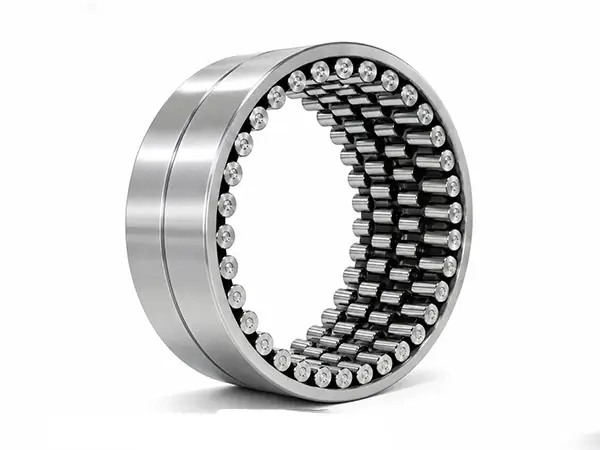
There is no universal best seal. Each design trades sealing efficiency against friction, speed capability, tolerance to misalignment and cost. Understanding those trade-offs is what allows a maintenance engineer to specify the right barrier for a specific machine.
Elastomer lip seals — typically nitrile rubber (NBR), hydrogenated nitrile (HNBR) or fluoroelastomer (FKM) — press a flexible lip against a ground shaft or wear sleeve. They offer the lowest leakage and the best exclusion of fine dust among single-element seals, which is why they remain the default on plummer block housings, gearbox shafts and many mounted bearing units.
...
For more details on the best seals for roller bearings in dusty environments, please click here: https://www.chgbearingtech.com/blog/best-seals-for-roller-bearings-in-dusty-environments/