
Heavy-duty vibrating screens are the backbone of material processing in mining, aggregates, and industrial sectors. Yet structural failures—cracks in side plates, broken beams, or weld fatigue—remain costly and dangerous. These failures not only halt production but also risk worker safety and escalate maintenance budgets. Understanding why these failures occur and how to prevent them is critical for any operation that depends on consistent screening performance. This article examines the root causes of structural breakdowns and presents proven engineering strategies, including the advanced approaches adopted by leading manufacturers like Haiside, to ensure long-term reliability.
Structural failures typically manifest in three forms: fatigue cracking, resonance-induced damage, and material degradation. Fatigue cracking, the most common, develops over millions of cycles due to cyclic stress concentrations at weld joints, bolt holes, or geometric transitions. Resonance occurs when the operating frequency aligns with a natural frequency of the structure, amplifying vibration amplitudes beyond design limits. Material degradation can result from corrosion, abrasion, or substandard steel grades that lack sufficient impact toughness.
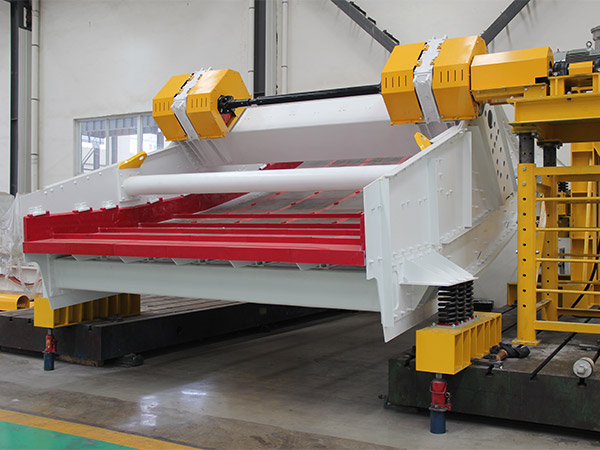
Preventing failures starts at the design stage with a focus on fatigue life optimization. Finite element analysis (FEA) is now standard to simulate stress distribution under dynamic loading. Critical areas such as the discharge end, feed box, and side plate transitions must be reinforced. Haiside engineers, for example, use FEA to identify high-stress zones and apply generous radii, tapered transitions, and ribbed stiffeners to reduce stress concentration factors.
...
For more detailed information on preventing structural failures in heavy-duty vibrating screens, please click here: https://www.hsd-industry.com/news/avoiding-structural-failures-in-heavy-duty-vibrating-screens/