
Formwork misalignment remains one of the most persistent challenges in concrete construction. Even minor deviations—measured in millimeters—can cascade into costly rework, structural weaknesses, and schedule delays. While traditional methods rely on manual measurement and physical guides, the emergence of laser-guided systems has fundamentally changed the precision achievable on site. This article examines how laser-guided technology solves misalignment issues and why companies like Gaofei are leading the shift toward automated accuracy.
Formwork defines the shape, surface finish, and dimensional accuracy of cast-in-place concrete. When panels shift during pouring or curing, the resulting misalignment creates uneven surfaces, out-of-tolerance dimensions, and potential structural defects. The immediate consequence is removal and re-erection—an expense that often consumes 10–15% of total formwork labor costs. Beyond direct costs, misalignment leads to increased material waste for patching, reduced architectural quality, and compromised load-bearing capacities. In multi-story projects, cumulative errors can render entire floor levels unusable.
Traditional control methods—plumb bobs, spirit levels, and tape measures—are inherently limited by operator skill, environmental conditions, and the physical act of reading marks. Even a skilled crew can achieve only ±3 mm tolerance over 3 meters under ideal conditions. Wind, vibration from nearby operations, and temperature effects on thermal expansion introduce additional uncertainty.
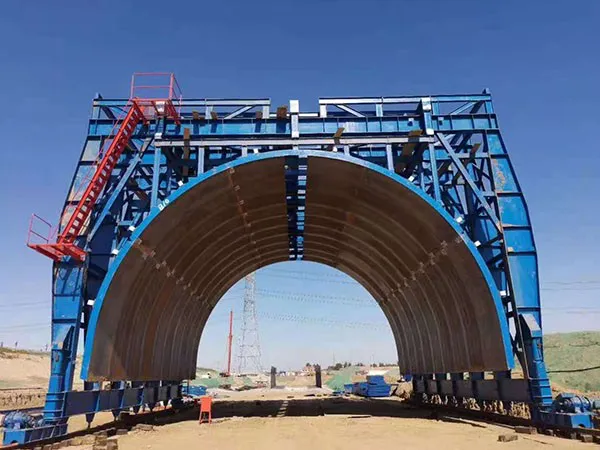
To understand the value proposition, it is useful to compare conventional alignment techniques with laser-guided systems across three decisive criteria: accuracy, efficiency, and usability.
...
For more details on using laser guidance systems to prevent template misalignment, please click here: https://www.gf-bridge-tunnel.com/a/blog/laser-guided-formwork.html